Oil Change Timing: A Practical Guide Based on Mileage, Time, and Driving Habits
Knowing when to schedule an oil change is less about following one universal number and more about understanding the vehicle, the oil it uses, and how it is driven. Modern engines and lubricants often allow longer intervals than older vehicles, but regular oil maintenance remains essential for protecting moving engine parts.
A practical maintenance plan considers mileage, calendar time, oil specifications, and daily driving conditions. It also accounts for dashboard reminders and occasional checks under the hood, rather than relying only on a sticker or a rule of thumb.
Why Oil Change Advice Has Changed
For decades, many drivers heard that every vehicle needed fresh oil every 3,000 miles. That advice can still be relevant for some older engines or demanding driving conditions, but it is not a universal modern standard. Improvements in engine design, oil filtration, synthetic lubricants, and computerized maintenance systems have changed the calculation.
Start With the Owner’s Manual
The owner’s manual should come before advice from advertisements, friends, or general internet checklists. It identifies the required viscosity, such as 0W-20 or 5W-30, the necessary performance specification, whether synthetic oil is required, and the interval for normal or severe service. It may also set a time-based limit, such as a certain number of months, and explain when to replace the oil filter.
Mileage Is Only One Part of the Answer
Modern maintenance guidance often places many vehicles in a broader range than the old 3,000-mile rule, but the correct interval remains vehicle-specific. A discussion of brake services may focus on wear and inspection, while oil maintenance depends heavily on the exact lubricant and engine design. In both cases, the vehicle maker’s maintenance schedule is the best baseline.
As a general reference, newer vehicles using approved synthetic or synthetic-blend oil may have longer intervals, while older engines using conventional oil may need attention sooner. An oil-life monitor may replace a fixed mileage reminder in some models. A driver who covers 1,000 miles each month will reach a mileage limit far earlier than someone who drives only 300 miles monthly, even if both own similar vehicles.
Why Time Still Matters
Oil can require replacement even when a vehicle has not traveled many miles. Repeated short trips may allow moisture and fuel dilution to remain in the crankcase because the engine does not stay hot long enough to evaporate them. Additives also gradually lose effectiveness, and a vehicle that sits for long periods still experiences seasonal temperature changes and aging fluids.
Check whether the manual uses a “miles or months, whichever comes first” instruction. This is especially important for seasonal vehicles, low-mileage commuters, and cars used mainly for quick errands. A calendar reminder can prevent an infrequently driven vehicle from being overlooked.
Driving Habits That May Require Earlier Service
“Severe service” does not necessarily mean racing or off-roading. Many ordinary driving patterns place extra demands on engine oil. A vehicle used for brief errands and extended idling can need a different schedule than one driven mostly on open highways.
- Frequent stop-and-go traffic or long periods of idling
- Repeated trips of fewer than five miles
- Towing a trailer or carrying heavy cargo
- Driving on dusty, gravel, or unpaved roads
- Regular mountain driving or extreme hot and cold weather
- High-mileage engines with oil leaks or noticeable oil consumption
Oil Types: Compatibility Comes First
Conventional Oil
Conventional oil remains suitable for some engines when it meets the manual’s requirements. It may have a shorter service interval in certain applications, particularly under heavy use.
Synthetic Blend Oil
Synthetic-blend oil combines conventional and synthetic base oils. It can offer a middle-ground option for vehicles designed to use it, but it should never replace the specified oil simply because it seems less expensive or more convenient.
Full Synthetic Oil
Full synthetic oil generally handles heat and breakdown well, which is why many newer engines require it. Still, synthetic oil does not make an engine maintenance-free. The grade and approval listed in the manual matter as much as the word “synthetic” on the bottle.
How to Use an Oil-Life Monitor
- Reset the system only after the oil and filter have actually been replaced.
- Track the percentage or maintenance message over time.
- Use the owner’s manual if the display seems inconsistent with the vehicle’s service history.
- Remember that the system estimates oil condition from operating data, not necessarily from a direct oil sample.
- Treat an oil-pressure warning as urgent, rather than as a routine maintenance reminder.
A maintenance message generally means service is due soon. An oil-pressure warning light, often red, can indicate insufficient lubrication pressure. If that warning appears while driving, safely stop the engine as soon as practical and investigate the cause before continuing.
Signs Oil Service May Be Due
- An oil-life reminder or service message appears.
- The oil level repeatedly drops between checks.
- Oil spots, leaks, or a burning-oil smell are noticeable.
- The engine becomes unusually noisy.
- Service records show that the mileage or time limit has passed.
Dark oil alone does not prove that an oil change is overdue. Oil naturally darkens as it suspends combustion byproducts. More useful clues include the service schedule, oil level, warning messages, leaks, and unusual engine behavior.
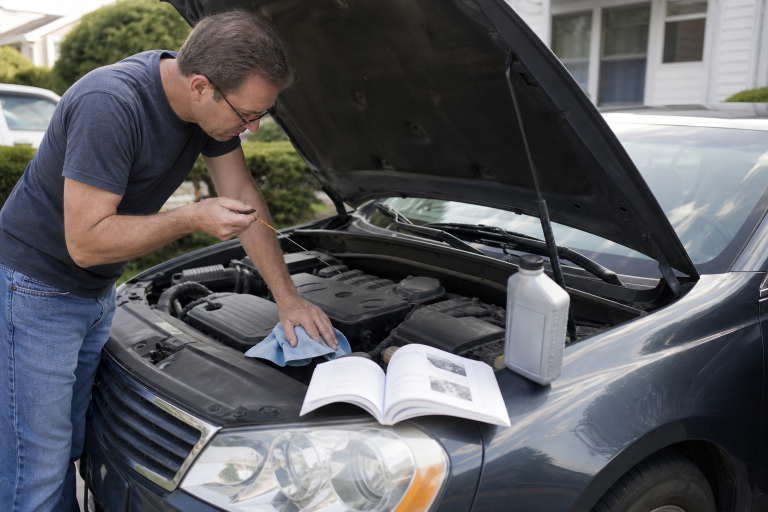
A Simple Home Oil Check
- Park on level ground and turn off the engine.
- Wait several minutes, then remove the dipstick and wipe it clean.
- Reinsert it fully, remove it again, and confirm the level falls between the marked lines.
- Look for a milky appearance, metal particles, or an unusually strong fuel odor.
- Use the specified oil for any needed top-off, and investigate repeated low levels.
What Happens When Oil Changes Are Delayed?
As oil ages, it can become less effective at reducing friction, carrying heat, and keeping contaminants suspended. Continued neglect may allow deposits and sludge to build up, increasing wear on bearings, timing components, and other moving parts. Being modestly late once does not guarantee engine failure, but repeatedly ignoring the schedule creates unnecessary repair risk.
Oil Changes and Responsible Disposal
Used motor oil should never go into a drain, onto soil, or into household trash. The proper handling and recycling of used oil helps prevent contamination and allows the material to be processed for future use. Store it in a sealed container, avoid mixing it with coolant or solvents, clean spills promptly, and use an approved local collection program.
Frequently Asked Questions
Is every 3,000 miles still the standard?
No. Follow the manufacturer’s interval, oil specification, and severe-service guidance instead of treating 3,000 miles as a universal rule.
Should oil be changed by mileage or time?
Use whichever limit comes first when the maintenance schedule lists both mileage and months.
Does synthetic oil last forever?
No. It may support longer intervals in approved applications, but it still becomes contaminated and eventually needs replacement.
What if the oil warning light comes on?
Determine whether it is a routine maintenance reminder or an oil-pressure warning. An oil-pressure warning should be handled promptly and cautiously.
Conclusion
Oil-change timing in 2026 is not a one-number decision. A dependable plan combines the owner’s manual, mileage, calendar time, oil type, driving habits, dashboard messages, and regular level checks. Tracking those details helps drivers avoid unnecessary service while reducing the risk of delaying maintenance too long.