How Technology Is Changing the Way We Search for Homes
Key Takeaways
- Artificial Intelligence (AI) and machine learning are personalizing home searches, making them more efficient and tailored to individual preferences.
- Virtual and augmented reality technologies are providing immersive property tours, allowing buyers to explore homes remotely.
- Smart home technologies are becoming standard, influencing buyer decisions and property values.
- Blockchain technology is enhancing the security and transparency of real estate transactions.
Introduction
The process of searching for a new home has undergone a significant transformation in recent years. Technological advancements have streamlined and personalized the experience, making it more efficient and accessible. For instance, Boca Raton FL real estate experts Matt & Nick Team leverage cutting-edge tools to provide clients with tailored property recommendations and virtual tours, enhancing the home-buying journey. The Matt and Nick Team is a dynamic real estate duo offering unparalleled service and expertise in South Florida. Led by successful property experts Matthew Moser and Nicholas Gonzalez, they are the founding agents of SERHANT. Florida and have a combined 17 years of industry experience. Specializing in East Boca Raton, Delray Beach, and surrounding areas, they leverage their extensive knowledge and firsthand understanding of the South Florida market to turn real estate dreams into reality. This article explores the key technologies reshaping the home search landscape.
AI-Powered Personalized Searches
Artificial Intelligence (AI) and machine learning algorithms are revolutionizing how potential buyers find homes. Platforms like Realtor.com have introduced AI-powered search experiences that allow users to describe their ideal home in natural language. For example, a user might search for a “3-bedroom ranch-style with 2 bathrooms and a pool in Austin, less than 5 years old,” and the AI interprets these preferences to present matching listings. This approach eliminates the need for multiple filters and closely aligns search results with individual preferences.
Moreover, collaborative filtering and predictive analytics enable these AI tools to surface properties that users might not have otherwise considered, expanding homebuyers’ horizons and making the entire process more serendipitous. AI can also factor in subtle preferences, like a quiet neighborhood or walkability, by learning from user engagement patterns over time. As the technology advances, we can expect even further personalization in property recommendations, resulting in less time spent searching and more time spent finding a home that truly fits one’s lifestyle.
Virtual and Augmented Reality Tours
Virtual and augmented reality (VR and AR) technologies have enabled buyers to tour properties remotely. High-quality 3D walkthroughs and virtual staging allow potential buyers to explore homes in detail without being physically present. This is particularly beneficial for out-of-town buyers or those with busy schedules. The ability to visualize a property’s layout and features virtually has become a standard expectation in the home-buying process.
Real estate agents now offer customized VR tours so clients can visit multiple properties in one sitting, eliminating the need for extensive travel. AR applications enable users to superimpose furniture, adjust wall colors, and visualize renovations directly from their smartphones, helping them envision what a property might look like once personalized. These innovations also provide sellers with a competitive edge, as an enhanced online presence through immersive tours can attract more interested buyers and accelerate sales.
Smart Home Integration
The rise of smart home technology is influencing buyer preferences and property values. Features such as smart thermostats, security systems, and energy-efficient appliances are becoming standard expectations. A recent report indicates that by 2030, smart home technology will be considered essential in new-build homes, with 62% of homeowners expecting such features to be standard. This trend underscores the growing importance of technology in home design and functionality.
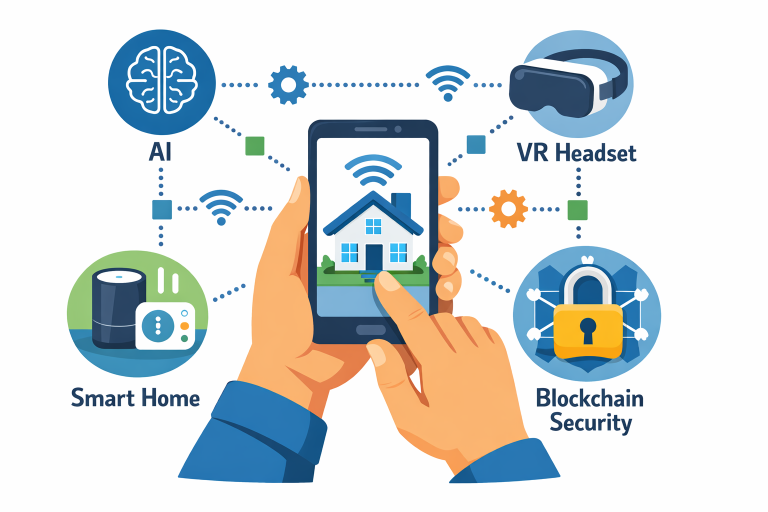
Smart home devices also enhance convenience, security, and overall living quality. Homebuyers are increasingly seeking properties that connect seamlessly with mobile devices, enabling them to manage lights, locks, temperature, and appliances—even from afar. For homeowners, automating everyday tasks such as climate control and remote surveillance not only saves energy but also contributes to peace of mind. The integration of Internet of Things (IoT) systems now allows homes to self-monitor for maintenance issues and energy usage, providing long-term value projections for prospective buyers.
Blockchain for Secure Transactions
Blockchain technology is enhancing the security and transparency of real estate transactions. By providing a decentralized, tamper-proof ledger, blockchain ensures that all parties have access to accurate, unalterable records. This reduces the risk of fraud and streamlines the closing process, making transactions more efficient and trustworthy.
Smart contracts, enabled by blockchain, can automate tasks such as title verification, escrow, and ownership transfers, reducing transaction errors and reliance on intermediaries. This technology also enables the digitization of property records, making them easily accessible to authorized parties. As adoption grows, the use of blockchain could significantly reduce the time and costs associated with property transfers while providing an additional layer of security against cyber threats.
Data-Driven Market Insights
Access to real-time data analytics allows buyers and sellers to make informed decisions. Platforms now offer comprehensive market analyses, including neighborhood trends, property value forecasts, and demographic information. This data empowers users to understand market dynamics and make strategic choices in their home search or sale.
Buyers can compare school ratings, crime statistics, and future urban development plans with just a few clicks, giving them a fuller picture of potential neighborhoods. Sellers can use heat maps and demand indicators to set competitive pricing strategies. Data visualization tools simplify complex information, making it digestible even for first-time buyers or sellers, and creating a democratized marketplace where informed decisions benefit everyone involved.
Mobile Applications and Online Platforms
The proliferation of mobile apps and online platforms has made home searching more convenient. Users can browse listings, schedule viewings, and communicate with agents directly from their smartphones. These platforms often integrate AI and data analytics to provide personalized recommendations and updates, keeping users informed throughout their home-buying journey.
Advanced mobile applications now incorporate mortgage calculators, 3D maps, and instant messaging with agents to streamline communications and expedite decision-making. Push notifications about new listings or market changes allow buyers to act quickly in competitive markets. The convenience of digital document signing and remote notary services means that nearly every aspect of a transaction can now be completed online. For agents, these tools improve workflow efficiency, allowing them to manage more clients and provide superior service.
Looking Ahead: The Future of Home Search Technology
As technology continues to evolve, so too will the home search process. Future developments may include AI algorithms that account for emotional factors like neighborhood “vibes,” machine-learning systems that predict up-and-coming areas before prices rise, or even fully immersive virtual homebuying experiences combining AR and VR with digital financial and legal services. Sustainability and energy-monitoring features are also expected to play a larger role, guiding buyers toward properties that align not only with life goals but also with environmental values.
Conclusion
Technology has fundamentally changed the way we search for homes, making the process more personalized, efficient, and secure. As innovations continue to emerge, staying informed about these advancements will be crucial for buyers, sellers, and real estate professionals alike. By embracing these technological shifts, both homebuyers and industry professionals can look forward to a more seamless and satisfying real estate journey.