Top Electrical Innovations for Commercial Buildings
Table of Contents
- Smart Building Technologies
- Advanced Energy Storage Solutions
- Renewable Energy Integration
- AI-Powered HVAC Systems
- Wireless Power Transmission
- Electric Vehicle (EV) Charging Stations
- Building Energy Management Systems (BEMS)
- Conclusion
Technological advances in the commercial building sector are rapidly transforming how properties are designed, constructed, and managed. For property owners and managers, keeping up with these innovations is essential to staying competitive, optimizing energy use, and providing the best experience for tenants and clients. Today’s electrical advancements are not just about efficiency but also about achieving greater occupant comfort, safety, and sustainability. If your property is due for an upgrade, exploring commercial electrical services tailored to modern technologies is a smart move to ensure seamless integration and optimal performance.
The evolving landscape means everything from lighting to energy management is now interconnected and data-driven. As smart technologies and sustainability goals reshape how commercial buildings operate, understanding these trends can help building owners future-proof their properties and enhance operational efficiency for years to come.
As energy reliability becomes more critical and regulatory demands increase, facility owners are increasingly seeking innovative solutions not only for lighting and power but also for all internal systems. Commercial electrical upgrades now go hand in hand with sustainability and long-term cost savings, a win-win for forward-thinking organizations.
Facility comfort and climate control remain a priority. To maximize energy-efficiency improvements, integrating advanced commercial HVAC systems with electrical enhancements creates synergies that drive significant savings and boost occupant satisfaction.
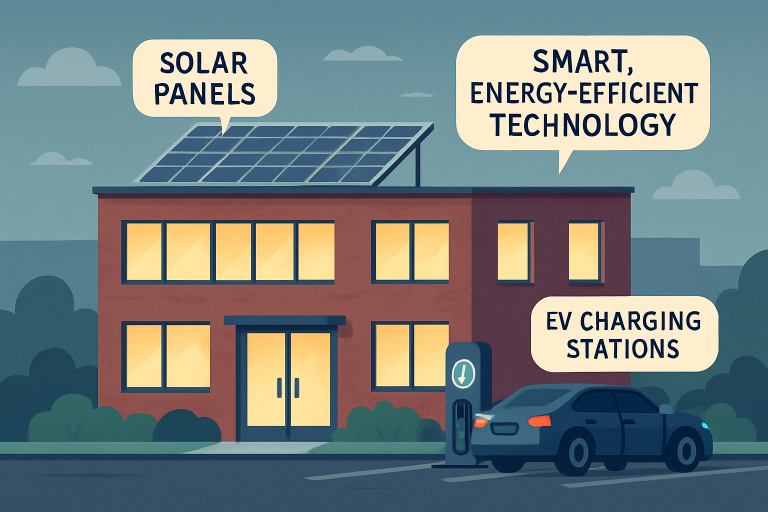
Smart Building Technologies
Smart building technologies leverage artificial intelligence (AI) and the Internet of Things (IoT) to automate and optimize functions throughout commercial spaces. These interconnected systems enable integrated control of lighting, HVAC, security, and more all managed from centralized platforms. Through real-time occupancy sensing and adaptive environmental controls, smart buildings deliver reduced energy consumption and increased productivity. According to Forbes, adoption of AI-based automation has led to up to 35% total energy savings in some smart office environments. As building systems “learn” usage patterns, they tailor settings to both user preferences and external conditions, ensuring comfort and strong operational efficiency.
Advanced Energy Storage Solutions
Battery-based energy storage solutions, including Battery Energy Storage Systems (BESS), are revolutionizing how commercial facilities manage power demand. By storing surplus electricity, whether from the grid or on-site renewables, during off-peak times, businesses can use stored energy during peak demand or outages, thus lowering utility bills and minimizing downtime. These storage systems are essential for grid resiliency, helping buildings meet sustainability goals while maintaining uninterrupted operations in case of disruptions or emergencies.
Renewable Energy Integration
Seamlessly incorporating solar panels and wind turbines into the building envelope is increasingly feasible with Building-Integrated Photovoltaics (BIPV). These systems combine energy generation and architectural aesthetics by embedding solar panels into roofing, façades, or windows. In addition to reducing dependency on the conventional power grid, renewable energy integration aligns with environmental certifications such as LEED and greatly lowers a building’s carbon footprint. Insights from the U.S. Department of Energy highlight how on-site renewables are empowering commercial facilities to achieve aggressive energy independence targets.
AI-Powered HVAC Systems
The HVAC field has made significant strides with the integration of artificial intelligence and machine learning. AI-powered HVAC systems can perform predictive maintenance, monitor equipment performance, and schedule interventions before a breakdown occurs. Furthermore, by analyzing indoor and outdoor data, these systems fine-tune heating and cooling in real time, avoiding inefficiencies and reducing wasted energy. Upgrades like variable-speed drives and smart thermostats can deliver energy savings of up to 30% compared to legacy systems, maximizing ROI on each upgrade.
Wireless Power Transmission
Wireless power transmission is gradually becoming a staple in next-generation commercial environments. Technologies such as inductive charging pads allow users to power up devices ranging from laptops to electric vehicles without plugging in. This advancement reduces cable clutter, simplifies workspace design, and enhances safety by reducing trip hazards. As wireless charging becomes more mainstream, expect flexible office layouts and a more seamless technology experience for everyone.
Electric Vehicle (EV) Charging Stations
As electric vehicle adoption grows rapidly, installing EV charging stations is now a core amenity for progressive commercial buildings. Providing reliable charging not only attracts environmentally conscious tenants but also positions your property for the future, with potential for additional revenue via user fees. Making provisions for EV infrastructure also helps meet evolving state and municipal codes while supporting sustainability and decarbonization goals.
Building Energy Management Systems (BEMS)
BEMS leverage advanced analytics, AI, and IoT to gather and process real-time data on a building’s energy performance. Modern systems give facility managers granular control and insight, enabling data-driven decisions that lower costs, detect anomalies, and optimize scheduling of critical equipment. Integrating BEMS with other smart building technologies enhances value by enabling proactive measures to reduce energy waste while maintaining a healthy, comfortable indoor environment.
Conclusion
Staying abreast of these electrical innovations enables commercial property owners to lead in efficiency, sustainability, and competitive value. By embracing smart building technologies, energy storage, renewables, AI-driven HVAC, wireless power, EV infrastructure, and integrated energy management, you invest in long-term resilience and in the people who occupy your spaces every day.
`